

What is Vučić's strategy?
The Serbian president has announced his resignation, but there is more at play


Hello!
Welcome back to Balkan Brew, your weekly Balkan digest, landing in your inbox every Friday morning.
DID WE FORGET SOMETHING? Last week’s story about a close adviser to Serbian president Aleksandar Vučić being paid by the German government went out without a link. Here it is.
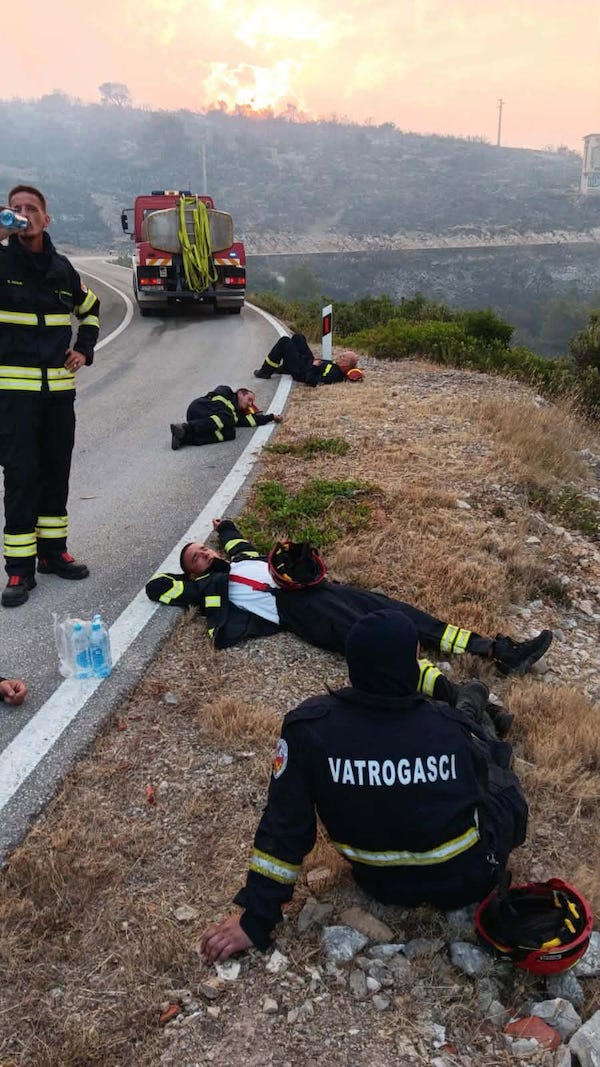
ON OUR MIND RIGHT NOW. Bosnia and Herzegovina’s and Croatia’s World Cup runs are over.
But we can still take some comfort in the fact that the former Yugoslavia was, by far, one of the most represented countries in the round of 32.
ONWARD AND UPWARDS. If you want to support our work, share this newsletter with someone who might enjoy it! And if you’re new here, why not join the crew? All you have to do is hit the button below.

What is Vučić’s strategy?
Serbian President Aleksandar Vučić announced on Saturday that he would resign. What is behind it?
WHEN. “These are my last days and weeks as the republic’s president,” he said, keeping it vague and confusing.
REALLY? Vučić’s statements require a truckload of salt. He has repeatedly announced early elections that never materialized.
TRUST ME BRO. He has also announced resignations from various roles without following through, going back to 2004, when he claimed he was leaving politics altogether.
IS THIS IT? Few expect Vučić to step away from power. More likely, he is positioning himself to become prime minister as his second and final presidential term ends in 2027.
STRATEGY. With both presidential and parliamentary elections approaching, and mounting pressure, Vučić is recalibrating how to retain control. He may, however, be overplaying his hand, writes Vreme editor-in-chief Filip Švarm.
DIVISION. Meanwhile, the student movement appears increasingly fractured. This was on display at the Vidovdan rally in Kraljevo that abandoned references to corruption to embrace once again the topic of Kosovo.
MORE OF VUČIĆ ANNOUNCEMENTS. The reintroduction of military service in 2027. Further arms purchases from China, despite EU objections.
IN BRUSSELS. The EU is considering resetting its relationship with Serbia as the country rolled back controversial laws that would undermine democracy, Politico reports.
It’s an embarrassing proposal, considering the scale of repression over the past year. Luckily, not everyone’s on board.

Friends with benefits
Montenegro is widely expected to become the next EU member state.
And that could happen sometime in 2028.
SMALL PROOF? The EU plans to allocate €3.2 billion to Montenegro in its next multiannual budget once the country joins, through farm subsidies and regional funding.
THEY DID THE MATH. That would cost around €1 per EU taxpayer over the full budget cycle, from 2028 to 2034.
“A VERY CHEAP CUP OF COFFEE.” That’s how one senior EU official described it to Politico.
GOING GRADUAL. The European Commission is considering changing enlargement rules so candidate countries can access some economic benefits before becoming full members.
These could include access to EU funding programmes, preferential trade arrangements, and partial access to the single market.
The idea is to give candidate countries enough incentive to adopt unpopular reforms even without a clear timeline for full membership.
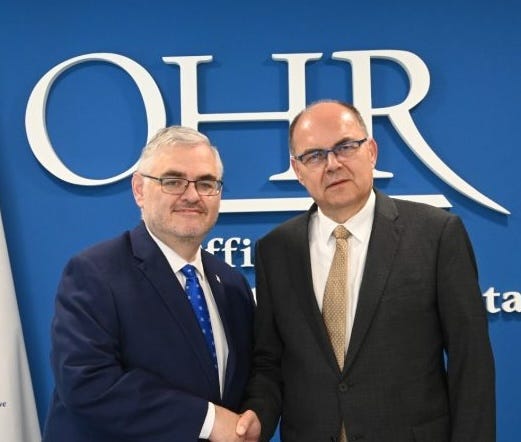
NEW POLICIES. Under Trump, the US wants to sell more liquefied natural gas to several Balkan countries – and according to The Economist, that’s the key to understanding Washington’s current policy in the region.

New violence, old debts
On Wednesday, unknown attackers firebombed three residential buildings linked to politicians from Greece’s ruling party, New Democracy, in Thessaloniki.
Vagia Nestora, 72, died in the attacks. She was the mother of Afroditi Nestora, a lawyer and New Democracy member who was also injured.
NOT A FIRST. Greece has a long history of attacks and political violence, mostly carried out by fringe groups.
Some footage from the scene of the bombings
LOCKED OUT. Greece has largely recovered from the catastrophic debt crisis of the 2010s.
BUT. Around 1.5 million citizens still cannot take out new loans and are effectively excluded from the banking system, Reuters reports.
During the debt crisis, many were unable to repay existing loans, which then ballooned because of unpaid interest and eventually became impossible to settle.
Today, that means they cannot borrow again until those old debts are cleared.

IN OTHER NEWS.
Montenegro will extradite Iranian hacker Amir Barati to the US. He is accused of taking part in massive cyberattacks on at least 150 American universities and causing up to $3.4 billion in damages.
Slovenia may move its embassy in Israel from Tel Aviv to Jerusalem. It is another sign of how close the new Slovenian prime minister, Janez Janša, is to Israel.
1,171 women in Kosovo gave accounts of obstetric violence to the feminist online platform Grazeta. But because there is no proper complaint mechanism, none of it is reported to the authorities.

AND FINALLY.
Josip Dabro has announced that he will start recording an album of patriotic songs in mid-August.
You probably know him for other reasons: the former Croatian minister of agriculture is on trial for illegal possession of weapons and explosives. Photos of him shirtless and firing a Kalashnikov in a field surfaced in January 2025. We’re sure the new album is going to be a banger.
NOT ONLY THE HORSES. Podgorica, the capital of Montenegro, has a serious problem with abandoned horses and other animals, writes AP. Surprising as it sounds, this is nothing new, but the recent heatwave has put it back in the spotlight.
And that’s a wrap for this week! As always, if you have comments or just want to say hi, just reply to this email or leave us a comment on Substack. We’re always happy to hear from you.
If you want to know more about what we do, we have written about it in this special issue. AI was used to slightly proofread the text.
Until next week, take care!
BB
Vučić learned from Tito that survival means never fully committing. His resignation announcement is theater, buying time while he tests which patron, Brussels or Moscow, still needs a Balkan broker. The real question is whether Dačić and Vulin now see their opening.